In recent years, the burgeoning affective computing technology has been applied in a range of industries covering healthcare, education, employment, business, and law enforcement. The increased use of affective computing has raised concerns about the topic of affective computing regulation among a growing number of researchers outside the area. Now affective computing has entered a multi-modal stage, and there are many elements that can test and identify emotions, including voice, facial expressions, body language, and posture. The hazards posed by affective computing algorithms or the technology itself may be classified into three categories: legal, ethical, and technological. However, there is still a gap in China's development of a good legal regulating structure for affective computing technologies. This report proposed that the bottom-line rules of affective computing should be defined with the limit of "light push" in the regulation of affective computing algorithms, and that applications that follow the rules would be differentiated based on the risk level.
Expert report
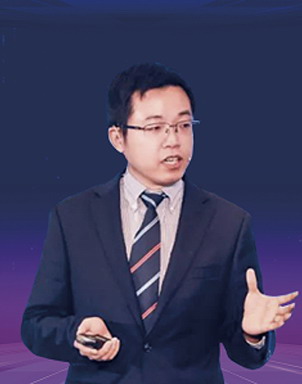
The Application Dilemma and Legal regulation of Affective Computing
Lusheng Wang, Vice Chair, School of Law, Southeast University of ChinaExpert Introduction
Lusheng Wang, Ph.D. in Law, is Deputy Director of the Social Science Division (presiding), Professor & Ph.D. Supervisor of Southeast University (SEU), Director of the National Experimental Base of Intelligent Social Governance Education Features (SEU), Executive Director of the Judicial Big Data Research Base of the People's Court of SEU, President of the Big Data and Artificial Intelligence Law Research Society of Jiangsu Law Society, and Deputy Director of the Case Management Professional Committee of the Procuratorial Research Association of China Law Society. Prof. Wang has mainly been working in AI jurisprudence, criminal procedure jurisprudence, and the judicial system. In addition, he has presided over nearly 20 projects, 4 of which are at the state level, consisting of one major project, one key project, and one youth project supported by the National Social Science Foundation of China (NSSFC), as well as one key project of the National Research and Development Program, and 6 of which are at the provincial-and-ministerial level supported by the Ministry of Education and the Ministry of Justice of the People's Republic of China. In addition, Prof. Wang was the winner of the Outstanding Youth in Education Award (OYEA) of the SEU in 2015 and was on the list of Zhongying Young Scholars in 2016..